9 Reasons OWCP Injury Claims Get Delayed

You submitted your OWCP claim three weeks ago. Maybe four? You’ve been checking the mail every day like you’re waiting for lottery results, and honestly… that’s kind of what it feels like. Each day without news feels heavier than the last, especially when your bills don’t care about bureaucratic delays and your injury definitely isn’t getting better while you wait.
Here’s what probably happened: You got hurt at work – could’ve been anything from a slip on wet floors to years of repetitive strain finally catching up with you. You did everything right. Filed the paperwork. Got your supervisor’s signature. Sent it off to the Department of Labor thinking, “Okay, now I wait a reasonable amount of time and get the help I need.”
But reasonable? That word doesn’t seem to exist in the OWCP universe.
Your coworker Jenny mentioned her claim took six months. Your neighbor’s brother-in-law swears his took over a year. And that guy in the break room – the one who always has horror stories – he’s convinced the whole system is designed to make you give up. Sometimes you wonder if he’s right.
The thing is… you can’t just give up. This isn’t some bureaucratic inconvenience you can shrug off and move on from. We’re talking about your health, your ability to work, your family’s financial stability. When you’re dealing with a legitimate work injury, every day that claim sits in limbo is a day you’re struggling – physically, financially, emotionally.
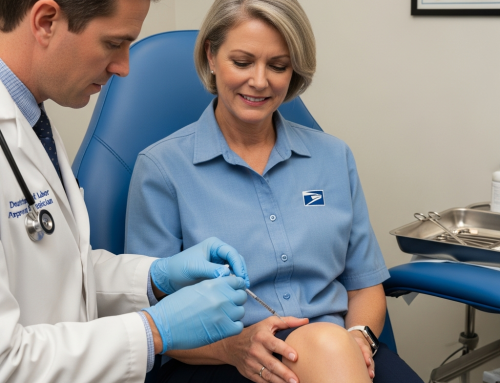
I’ve watched hundreds of federal employees navigate this exact frustration. They come into our clinic worried sick (literally) about why their claim seems stuck in quicksand while their pain is very real and very present. The rent’s still due. Physical therapy appointments are piling up. And the uncertainty? It’s almost worse than the injury itself.
But here’s something most people don’t realize – and it’s actually good news, buried under all this stress – most OWCP delays aren’t mysterious black holes where claims disappear forever. They’re usually specific, fixable problems that happen for predictable reasons. Kind of like when your computer freezes… frustrating as hell, but usually there’s a logical explanation and a way to get things moving again.
The OWCP system processes thousands of claims, and while it’s far from perfect (understatement of the year), it does have patterns. Certain mistakes trip up claims every single time. Specific documentation gaps cause the same delays over and over. There are forms that look optional but absolutely aren’t. Medical requirements that seem straightforward but have hidden gotchas.
Think of it this way – if you knew that 90% of traffic jams on your commute happened at the same three intersections, you’d probably find alternate routes, right? Same principle here. Once you understand where OWCP claims typically get stuck, you can avoid those bottlenecks… or at least know how to navigate through them faster.
That’s exactly what we’re going to talk about. Not the generic “be patient, these things take time” advice you’ve probably heard (because honestly, who has time for that when you’re hurting?). We’re diving into the real reasons claims get delayed – the specific, preventable issues that cause weeks or months of unnecessary waiting.
Some of these might surprise you. Like how the timing of when you submit certain forms can make or break your processing speed. Or why that medical report you thought was thorough might actually be working against you. There are even delays that happen because of simple miscommunication between your doctor’s office and OWCP – stuff that seems minor but can derail everything.
By the end of this, you’ll know which red flags to watch for, what documentation actually matters (versus what just feels important), and most importantly – what you can do right now if your claim seems stalled. Because sitting around hoping things speed up isn’t a strategy. Understanding the system and working with it? That’s how you get results.
Your claim doesn’t have to be another horror story. Let’s figure out how to make it a success story instead.
What OWCP Actually Is (And Why It Matters for Your Claim)
Think of OWCP – the Office of Workers’ Compensation Programs – as that one government office that’s supposed to help federal employees when they get hurt on the job. It’s like having insurance, but… well, it’s the government, so everything takes longer and involves more paperwork than you’d expect.
Here’s the thing that trips people up: OWCP isn’t just one program. It’s actually four different programs rolled into one office, each with its own rules, timelines, and quirks. Federal employees fall under FECA (Federal Employees’ Compensation Act), but there’s also coverage for longshoremen, coal miners, and energy workers. It’s like walking into what you think is a coffee shop and discovering they also do dry cleaning, tax prep, and pet grooming – same building, completely different processes.
The Claims Process: More Complex Than It Looks
When you file an OWCP claim, you’re essentially asking the government to admit that yes, your job hurt you, and yes, they should pay for fixing it. Sounds simple enough, right?
Actually, it’s more like trying to prove to a skeptical relative that you really did hurt your back moving their couch. They want documentation, witness statements, medical proof, and – oh wait – did you lift with your knees? Can you prove it? Where’s the video evidence?
The process typically involves several key players: your supervisor (who has to verify what happened), a claims examiner (who decides your fate), medical professionals (who translate doctor-speak into government-speak), and sometimes vocational rehabilitation specialists. It’s like having a committee vote on whether your pain is real… which, honestly, can feel pretty demoralizing.
Medical vs. Disability Benefits: The Crucial Distinction
This is where things get genuinely confusing, and I don’t blame anyone for getting lost here. OWCP handles two completely different types of benefits, and mixing them up can delay your claim for months.
Medical benefits are relatively straightforward – they cover your doctor visits, treatments, medications, all that jazz. Think of it like car insurance after an accident; they’ll pay to fix the damage.
Disability benefits, on the other hand, are compensation for lost wages when you can’t work. This is where OWCP gets really picky. They want to know: Are you completely unable to work? Partially unable? Can you do different work? It’s like they’re saying, “Okay, your leg is broken, but can you still answer phones with your hands?”
The tricky part? These benefits follow different approval processes and timelines. You might get medical coverage approved quickly but wait months for disability payments. Or vice versa. It’s not logical, but… well, welcome to government bureaucracy.
The Documentation Dance
Here’s something that catches almost everyone off guard: OWCP operates on what I call “prove it or lose it” principles. They don’t take anyone’s word for anything. Your supervisor says you were injured at 2 PM on Tuesday? Prove it. Your doctor says you need surgery? Better have the medical records to back that up.
It’s honestly exhausting. You’re dealing with an injury, probably in pain, maybe worried about bills – and now you need to become a professional document collector. Every form has to be filled out completely (no, seriously, they’ll send it back for missing a middle initial). Every statement needs to be detailed and accurate.
Think of it like applying for a mortgage, but instead of proving you can afford a house, you’re proving your body is actually broken. The paperwork requirements feel almost insulting when you’re genuinely hurt and just want help.
Why Timing Matters More Than You Think
OWCP has some pretty strict deadlines, and missing them can derail your entire claim. You’ve got 30 days to report an injury to your supervisor, three years to file a formal claim for most conditions (though there are exceptions for occupational diseases that develop slowly)…
But here’s the kicker – these deadlines aren’t always clear-cut. What counts as “reporting” an injury? Does mentioning your sore back to your coworker count, or does it need to be a formal incident report? The rules seem designed by people who’ve never actually been hurt at work.
The whole system feels like it was built to be thorough rather than efficient. Which, honestly, might make sense from a taxpayer protection standpoint, but when you’re the one waiting for approval while bills pile up… well, let’s just say the perspective is different.
Document Everything – And I Mean Everything
Look, I can’t stress this enough… the smallest details can make or break your claim. That receipt for parking at the doctor’s office? Keep it. The email your supervisor sent about light duty? Screenshot it immediately.
Start a dedicated folder – digital or physical, doesn’t matter – but make it your OWCP bible. Every medical report, every correspondence, every form you fill out. I’ve seen claims delayed for months because someone couldn’t find a single piece of paperwork that proved their injury happened at work.
Here’s what most people miss: take photos of your injury progression. Not just the dramatic day-one shots, but document the healing process. Sometimes OWCP questions whether an injury is as severe as claimed, and having visual proof of how it affected your daily life becomes invaluable.
Master the Art of Following Up (Without Being Annoying)
There’s a fine line between staying on top of your claim and becoming that person who calls every day. But honestly? The squeaky wheel gets the grease, especially with government bureaucracy.
Set reminders to follow up every two weeks if you haven’t heard anything. When you call, be friendly but firm. Ask for specific timelines – not “we’re processing it” but “when exactly should I expect to hear back?” Get names, reference numbers, case worker details. Write it all down.
Pro tip: email creates a paper trail that phone calls don’t. After every conversation, send a brief email summarizing what was discussed and any promised next steps. It’s amazing how people’s memories improve when there’s documentation involved.
Know Your Medical Provider Rights (They Don’t Always Tell You)
Here’s something that drives me crazy – not all doctors understand OWCP requirements, and some frankly don’t want to deal with the paperwork hassle. You have the right to choose your treating physician from their approved list, and if your doctor isn’t being responsive to OWCP requests, you can switch.
Before each appointment, remind your doctor’s office that this is a federal workers’ comp case. Give them the claim number, adjudicator’s contact info, everything they need to submit reports promptly. Some offices treat OWCP paperwork as low priority… until you make it clear you’re paying attention.
Also – and this is crucial – make sure your doctor connects your current symptoms directly to your work injury in their reports. Vague language like “patient reports pain” doesn’t cut it. You need clear statements like “the patient’s shoulder pain is directly related to the workplace injury sustained on [date].”
Understand the Timeline Traps
OWCP has specific deadlines for everything, but they don’t always advertise them clearly. You typically have 30 days to report an injury to your supervisor, but honestly, do it immediately if possible. The longer you wait, the more they’ll question whether it really happened at work.
For filing your actual claim (Form CA-1 for traumatic injuries, CA-2 for occupational diseases), you’ve got up to three years… but don’t push it. Earlier is always better. Same goes for medical treatment – if you delay seeing a doctor, they’ll assume the injury isn’t serious.
Here’s a sneaky deadline most people miss: if OWCP approves your claim initially but later wants to reduce or terminate benefits, you only have 30 days to request a hearing after receiving their decision. Miss that window, and you’re starting from scratch.
Navigate the Continuation of Pay Maze
COP is supposed to buy you time while your claim is being processed – up to 45 days of regular pay. But the requirements are picky. Your injury has to result in disability or the need for medical treatment beyond basic first aid, and you need to provide medical evidence within 10 calendar days of filing your claim.
Don’t assume HR will handle this automatically. Ask specifically about COP status and follow up if payments seem off. I’ve seen people lose thousands in COP benefits simply because paperwork got lost in the shuffle between agencies.
Build Relationships, Not Just Files
This might sound weird, but try to develop a working relationship with your claims examiner. These folks handle hundreds of cases – being polite, organized, and easy to work with makes you memorable for the right reasons.
When you submit documents, include a brief cover letter summarizing what you’re sending and why. Make their job easier by organizing everything clearly, and they’re more likely to prioritize your case when things get busy.
Remember, delays often happen because of miscommunication, missing paperwork, or simple human error. The more you can eliminate friction in the process, the smoother things tend to go.
When the System Fights Back
Look, let’s be real about this – OWCP isn’t exactly designed to make your life easier. The system seems built to test your patience, your persistence, and honestly… your sanity. I’ve watched too many people get completely overwhelmed by what should be a straightforward process.
The biggest trap? Thinking it’ll be simple because you’re clearly injured. You’d think “I got hurt at work, here’s my doctor’s note” would be enough. But the claims process treats every case like a potential fraud investigation, which means you’re guilty until proven innocent. That’s frustrating as hell, especially when you’re already dealing with pain and missed work.
The Paperwork Avalanche Problem
Here’s what actually happens: You submit your initial claim, feeling pretty good about getting it done. Then comes Form CA-16. Then CA-17. Then your supervisor needs to fill out CA-1 (again, apparently). Meanwhile, your doctor’s office is asking which forms they need to complete, your HR department is playing phone tag with OWCP, and you’re sitting there wondering if everyone speaks the same language.
The real solution? Create a simple tracking system – and I mean ridiculously simple. A notebook works fine. Write down every form number, who needs to complete it, when you sent it, and when you followed up. When someone tells you “we never received that,” you can say “I submitted it on Tuesday the 15th at 2:30 PM.” Specific details make people take you seriously.
Also – and this might sound paranoid, but I’ve seen it too many times – always send documents with delivery confirmation. Always. That extra $3 for tracking might save you months of delays.
The Medical Evidence Maze
This is where things get genuinely tricky. Your doctor says you’re injured, but OWCP wants very specific language. They don’t just want “patient has back pain” – they want detailed explanations of how your work activities directly caused your specific condition.
Most doctors don’t speak “OWCP language.” They’re trained to diagnose and treat, not to write legal documents. So you end up with medical reports that are perfectly accurate but don’t give OWCP what they need to approve your claim.
What works better: Before your medical appointments, write down exactly what happened at work and how it’s affecting you now. Be specific about work tasks – not just “I lifted boxes” but “I repeatedly lifted 30-pound boxes from floor level to shoulder height for 6 hours.” Give your doctor ammunition to write a report that connects the dots clearly.
The Communication Black Hole
OWCP operates in this weird communication bubble where they’ll send you a letter asking for information… that you already provided three weeks ago. Or they’ll request additional medical evidence without explaining exactly what kind of evidence they need.
The claims examiners are handling dozens of cases, and honestly, they’re not always paying attention to the details of yours. That’s not an excuse – it’s just reality.
The workaround: Become the squeaky wheel, but do it strategically. Call every two weeks (not every day – that backfires). When you call, have your claim number ready and ask specific questions: “What specific medical information do you need?” “Which doctor should complete this form?” “What’s the next step in my case?”
Document these conversations too. “Spoke with Jane on March 5th, she said X, Y, Z.” When the next person tells you something different, you can reference that conversation.
The Waiting Game That Nobody Warns You About
Here’s the part that really gets to people: the complete silence. You submit everything perfectly, cross all your t’s, dot all your i’s… and then nothing. For weeks. Sometimes months.
OWCP doesn’t send “we’re still reviewing your case” updates. They just… disappear into their bureaucratic cave. Meanwhile, you’re dealing with medical bills, lost wages, and the stress of not knowing what’s happening.
The reality check: This is normal, unfortunately. Claims can take 45-90 days even when everything goes smoothly. Complicated cases? Much longer. Knowing this upfront doesn’t make it less frustrating, but at least you won’t spend every day checking your mailbox wondering if you did something wrong.
The key is having a backup plan during this waiting period – understanding your sick leave options, knowing what medical expenses you might need to cover temporarily, and keeping detailed records of everything.
Remember, this isn’t about you being difficult or the system being impossible. It’s just… messy. And that’s okay. You can navigate messy if you know what to expect.
What to Expect: The Reality Check You Need
Here’s the thing about OWCP claims – they’re not exactly known for their speed. I know that’s probably not what you want to hear when you’re dealing with an injury and worried about bills, but setting realistic expectations from the start will save you a lot of stress down the road.
A straightforward claim? You’re looking at anywhere from 30 to 90 days for initial processing. That’s assuming everything goes smoothly – no missing paperwork, no questions about whether your injury is work-related, no need for additional medical evidence. But let’s be honest… when does anything go completely smoothly with government paperwork?
More complex cases – those involving things like occupational diseases, mental health conditions, or situations where work-relatedness isn’t immediately obvious – can take months. Sometimes six months or more. I’ve seen cases drag on for over a year when there are significant disputes or appeals involved.
The waiting is brutal, I get it. You’re in pain, maybe can’t work, and every day feels like forever when you don’t know what’s happening with your claim.
Breaking Down What Happens Next
Once you’ve submitted your claim, it doesn’t just sit in a pile somewhere (though it might feel that way). There’s actually a process happening behind the scenes.
First, your claim gets assigned to a claims examiner. This person becomes your main point of contact – though you might not hear from them right away. They’ll review your initial submission, and here’s where those nine delay factors we talked about earlier can really come into play.
If anything’s missing or unclear, they’ll send you what’s called a “development letter.” Don’t panic when you get one – it doesn’t mean your claim is being denied. It just means they need more information. The key is responding quickly and completely. Every back-and-forth exchange adds weeks to your timeline.
Your medical evidence will likely be reviewed by an OWCP medical officer. If there are questions about your diagnosis or treatment, they might request additional medical reports or even order an independent medical examination. This is where things can really slow down – scheduling these exams can take weeks, and getting the reports back… well, that’s another few weeks on top.
The Communication Game (And Why It Matters)
Here’s something nobody tells you: being proactive about communication can actually speed things up. I know it seems counterintuitive – like you’d be bothering them – but regular, polite check-ins can help.
Call every two weeks or so. Not to complain or demand updates, but to ask specific questions: “Has my medical report been reviewed?” “Are there any outstanding items you need from me?” “What’s the next step in the process?”
Keep detailed records of every conversation. Date, time, who you spoke with, what they said. This isn’t just for your own sanity (though it helps with that too) – it can be crucial if you need to file an appeal later.
When Things Go Sideways
Sometimes claims get denied initially, and that’s not necessarily the end of the road. The appeals process exists for a reason, though it does add significant time to everything.
If you get a denial letter, don’t just accept it if you believe it’s wrong. You typically have 30 days to request reconsideration, and the statistics show that a good percentage of initial denials get overturned on appeal – especially when additional medical evidence is provided or when the work-relatedness is better documented.
But here’s the reality check: appeals can add months or even years to your case. It’s a marathon, not a sprint.
Managing Your Expectations (And Your Stress)
The hardest part about this whole process isn’t necessarily the paperwork or the medical exams – it’s the uncertainty. Not knowing when you’ll hear back, whether your claim will be approved, how you’re going to manage financially in the meantime.
If your claim is taking longer than expected, that doesn’t automatically mean it’s in trouble. Some delays are just… normal. Frustrating, but normal. The system is dealing with thousands of claims, and everything takes time.
Focus on what you can control: responding promptly to requests, keeping your medical appointments, maintaining good records. The rest? As hard as it is, you’ve got to let it go and trust the process.
Your claim will eventually get resolved – it’s just a matter of when, not if.
You know what? After walking through all these potential roadblocks, I get it if you’re feeling a bit overwhelmed. OWCP claims can feel like navigating a maze blindfolded – just when you think you’ve got your bearings, another twist appears.
But here’s the thing… and I really want you to hear this: you’re not alone in this. Every single day, we see people who’ve been struggling with these exact same issues. The missing medical records, the confusing paperwork, the endless waiting periods – it’s all incredibly common, and frankly, it’s not your fault that the system is this complicated.
I’ve watched clients go from feeling completely lost to finally getting the support they deserve. Sometimes it takes a while – longer than anyone wants, honestly. But what I’ve noticed is that the people who fare best are those who don’t try to figure everything out on their own. They ask questions. They seek guidance. They recognize that having someone in their corner who speaks “OWCP language” can make all the difference.
Getting Back on Track
The delays we’ve talked about? Most of them are fixable. That incomplete medical documentation can be gathered and organized properly. Those procedural missteps can often be corrected with the right approach. Even when it feels like you’re stuck in bureaucratic quicksand, there are usually paths forward… you just need to know where to look for them.
And let’s be real for a second – your health and financial stability shouldn’t have to wait while you decode government procedures. You’ve got enough on your plate dealing with your injury and recovery. The administrative maze? That’s where having experienced help becomes invaluable.
You Deserve Support
I see too many people burning out trying to handle their OWCP claims solo. They’re already dealing with pain, missed work, medical appointments, and family stress. Then they’re expected to become experts in federal workers’ compensation law too? That’s… well, that’s asking a lot of anyone.
Your claim isn’t just paperwork – it represents your livelihood, your ability to take care of yourself and your family. It deserves the attention and expertise that can help move things along smoothly.
If you’re reading this and thinking, “This sounds exactly like what I’m going through,” please don’t hesitate to reach out. We’ve helped countless federal employees navigate these waters, and we’d be honored to help you too. Sometimes just having someone look at your situation with fresh, experienced eyes can identify solutions you hadn’t considered.
You can give us a call, send an email, or even just fill out a quick form on our website. There’s no pressure, no sales pitch – just real people who understand what you’re facing and genuinely want to help. Because honestly? You’ve been dealing with enough stress already. Let us handle the paperwork battles while you focus on what matters most: your recovery and your peace of mind.
You’ve got this… and if you’d like some backup, we’ve got you.